November 4, 2026
A hybrid office has to support more than one way of working. Employees may come in for collaboration, client meetings, project work, training, or focused tasks, while others join remotely. That makes furniture planning less about filling every square foot with desks and more about creating a mix of settings people can use throughout the day.
At Lincoln Office, we help organizations across Central Illinois, the Quad Cities, and Northwestern Indiana design workplaces around how their teams actually work. Choosing corporate office furniture for a hybrid environment starts with understanding occupancy patterns, collaboration needs, technology, ergonomics, and how easily the space may need to change in the future.
Start With How Employees Use the Office
Before choosing desks or chairs, look at why employees come into the workplace. Some teams may spend most office days in meetings and collaborative sessions, while others need long periods of individual concentration. A company with rotating attendance may also need fewer permanently assigned workstations and more shared settings.
Observe which spaces are frequently full, which sit empty, and where employees improvise because the current layout does not support the task. That information can guide furniture decisions more effectively than simply replacing old pieces with newer versions of the same setup.
Lincoln Office takes a design-first approach, evaluating workflow, space utilization, and organizational goals before recommending furniture.
Create Distinct Zones for Different Types of Work
Hybrid offices benefit from variety. A single open floor filled with identical workstations may not support video calls, brainstorming, confidential conversations, focused work, and informal collaboration equally well.
Consider creating zones for individual focus, small-group collaboration, larger meetings, quick touchdown work, training, and social interaction. The furniture in each area should support the activity rather than forcing one setting to serve every purpose.
Corporate office furniture can include adjustable workstations, conference tables, lounge seating, mobile tables, storage, screens, and other pieces that make these zones easier to recognize and use.
Prioritize Furniture That Can Be Reconfigured
Hybrid attendance can change from day to day, and team structures may change over the life of a furniture installation. Modular corporate office furniture and movable pieces give organizations more flexibility when the number of people using a space shifts.
Tables on casters, mobile whiteboards, lightweight seating, modular lounge pieces, and adaptable workstation systems can help a room transition from a team meeting to a training session or project workspace. Furniture does not need to move constantly, but the option to reconfigure can reduce the need for a major redesign when work patterns change.
That flexibility is especially useful for organizations planning for growth, departmental changes, or evolving return-to-office policies.
Design Meeting Spaces for In-Person and Remote Participants
A hybrid meeting room needs to work for people on both sides of the screen. Furniture placement can affect sightlines, camera views, acoustics, power access, and whether remote participants can follow the conversation.
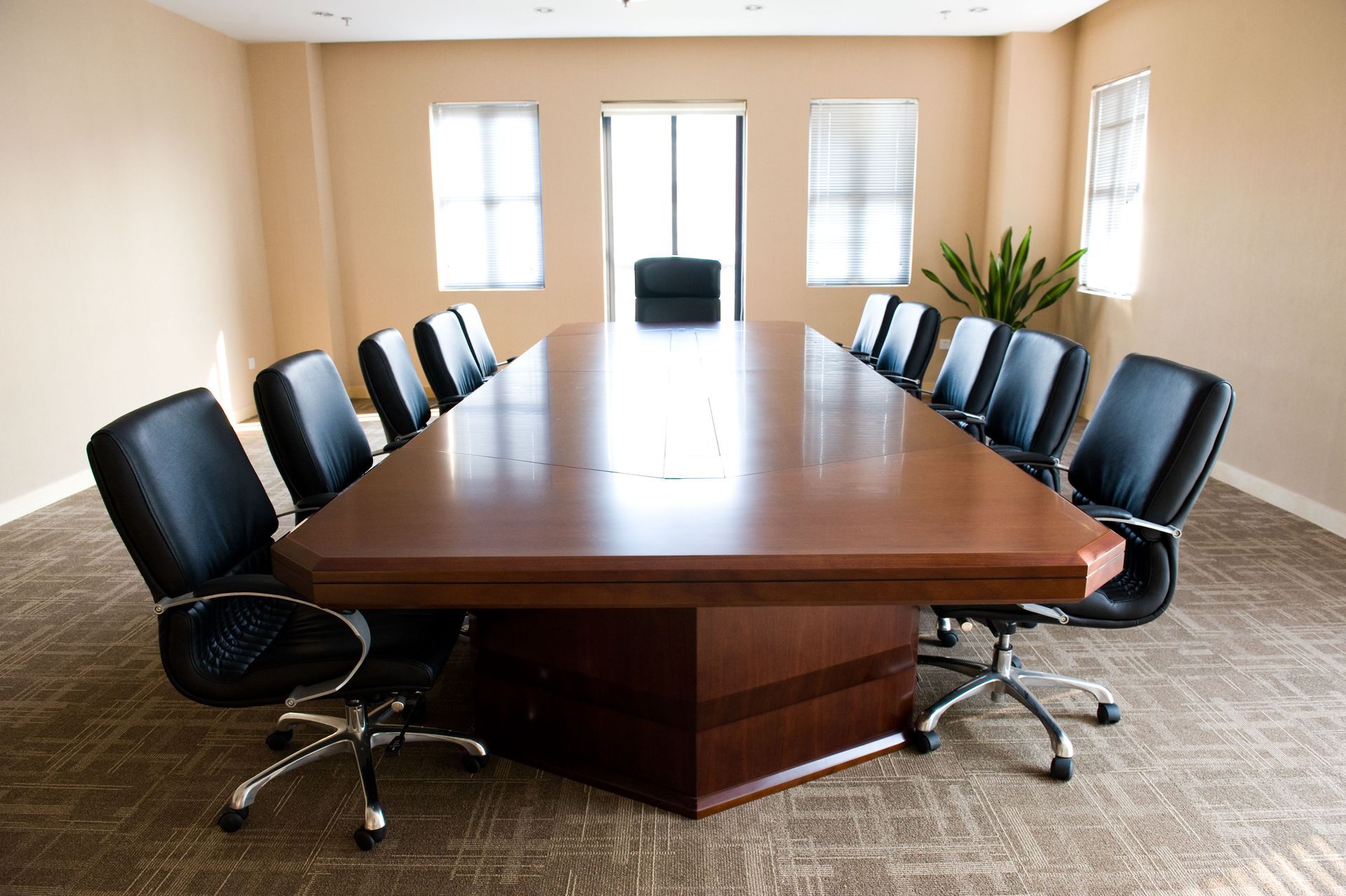
Conference tables should fit the room without pushing participants too far from displays or cameras. Smaller rooms may benefit from compact tables and movable seating, while larger collaborative settings may need multiple screens, flexible furniture, or layouts that keep everyone visible.
Lincoln Office designs conference and training centers with ergonomic seating, technology integration, breakout areas, and layouts intended to support engagement. Planning furniture and technology together can help prevent cords, displays, cameras, and power needs from becoming afterthoughts.
Balance Collaboration With Places to Focus
Collaboration is important in hybrid offices, but not every employee comes in to spend the entire day in group conversation. People may still need a quiet place to write, analyze information, prepare a presentation, or join a confidential call.
A useful floor plan can include open collaborative areas alongside individual workstations, quieter rooms, booths, screens, or other spaces that reduce distraction. Acoustic privacy deserves particular attention when several video meetings may be happening at the same time.
According to Mordor Intelligence, the United States office furniture market size was USD 15.82 billion in 2025. Its current market analysis notes continued demand for adaptable layouts, ergonomic upgrades, and furniture that supports changing hybrid attendance.
Make Ergonomic Seating a Baseline Purchase
Employees may not sit at the same desk every day in a hybrid model, making adjustability especially valuable. A chair that works for one person may not fit the next employee using the station unless it offers practical adjustment.
Look for task seating that allows users to adjust important elements such as seat height, back support, and arm position. Employees should be able to make those changes without needing a complicated setup process each time they use a shared workstation.
Lincoln Office offers ergonomic seating as part of its corporate furniture services and maintains an in-stock seating program for organizations that need certain seating solutions more quickly. When buying corporate office furniture, comfort should be evaluated alongside appearance, durability, and lead time.
Plan Power and Technology Into the Furniture Layout
Hybrid employees often arrive with laptops, phones, headsets, and other devices. A beautifully designed collaborative space can become frustrating if people have to search for power outlets or run cords through walking areas.
Consider where users will plug in at workstations, conference tables, lounge areas, and touchdown spaces. Furniture with integrated power or nearby accessible connections can make it easier for employees to move between settings while staying productive.
Technology planning should also account for monitors, docking stations, video conferencing equipment, and future upgrades. Coordinating these needs during space planning can result in a cleaner installation and reduce the need to retrofit furniture later.
Choose Durable Pieces for Shared Use
Hybrid corporate office furniture may be used by more people than assigned furniture because seats and workstations rotate among employees. Meeting rooms and collaboration areas can also experience frequent movement, reconfiguration, and visitor use.
Buyers should compare materials, construction, warranties, cleanability, and expected use rather than evaluating furniture only by style. A lower initial price may not provide better value if a heavily used chair, table, or workstation needs to be replaced sooner.
As a Steelcase Authorized Dealer, Lincoln Office provides access to furniture designed for commercial environments and honors applicable vendor warranties and return policies. Our team can also coordinate delivery and installation as part of a larger project.
Build a Furniture Plan Around the Budget and Timeline
Hybrid office projects do not always require replacing everything at once. A phased plan can prioritize the areas creating the most friction, such as outdated conference rooms, uncomfortable seating, underused workstations, or a lack of collaborative settings.
Before purchasing, consider:
- Occupancy: Estimate how many people use the office on typical and peak days.
- Work modes: Identify the mix of focus, collaboration, meetings, training, and social use.
- Lead times: Separate items that can be sourced quickly from custom or larger project orders.
- Durability: Choose materials and products appropriate for the expected level of shared use.
- Future changes: Favor layouts and systems that can adapt as teams and attendance patterns evolve.
An experienced project manager can help coordinate specifications, procurement, delivery, installation, and sequencing so the furniture plan fits the broader renovation or buildout schedule.
Use a Design Partner to Create a More Adaptable Office
A successful hybrid office is not defined by one product. It comes from combining furniture, layout, technology, circulation, acoustics, and employee needs into a workplace that supports several kinds of activity without feeling fragmented.
Lincoln Office has been transforming workplaces since 1935. Our locally owned company is a Steelcase Authorized Dealer with licensed workspace designers, industry-specific project managers, an in-stock seating program, and a design-first approach to corporate buildouts, renovations, conference spaces, and workplace modernization.
If your organization is planning a hybrid-office refresh in 2026, contact Lincoln Office to discuss your space and goals. Our team can help you select corporate office furniture, develop collaborative and focused work settings, coordinate installation, and build a workplace that can continue adapting as your organization changes.